
didj blog
•January 5, 2015 • Leave a Commentbarefoot
•December 30, 2014 • Leave a CommentJust as our bare feet on the earth make us one with the earth and our hair blows free with the free wind, so may peace reign. So may peace reign.
Love God, lovin’ the didj
•December 13, 2014 • 1 CommentI AM quiet now, thoughts getting lost. I lick my lips, wait a moment in the still of still, mind clearing, conscious, unconscious. I take a breath, not too much, enough, my lungs open. Exhale. Breath flows gently, smoothly, through buzzing lips. Primal drone fills, fills and keeps filling the forest I am in. Just one note but so much colour, drenched in texture, singing, rhythmic, full-body, so much time, timeless time… Space opens, harmonic tones dance with my breath, circular breath. Keep going. This is home. The drone doesn’t need to stop, animal voices rise from my throat, tongue ticking out a beat and then another, and another…daa daa… doo doo…hah hah hah…hey hey hey…waah…waah…
If you want to keep the sound going when you’re playing the didj, you’ve got to circular breathe. People think that’s really hard to do and so they put their didjes, lovingly brought back from their adventures in faraway Oz, up on eBay. Good news for me. But circular breathing isn’t really hard at all. It’s natural. It just takes a bit of practice, desire, perseverance, release from the noose of self-consciousness. You simply need to keep some air in your cheeks and squeeze it out while you breathe in until you can breathe out into the didj again. The drone keeps going, the music dreams on…
So it is that we breathe the Gospel into Gower for new generations. We’ve just got to keep the music going. God breathes Spirit into us and we breathe out Word. God’s Life, our Life, all Life…circular breathing. We need to keep some breath to squeeze out while we breathe in. That’s prayer. The music goes on.
You are gathering for prayer in small pockets all around Gower. In your homes, outside, in quiet church buildings, prayer groups are forming. God-filled people are praying for Gower. Praying for the children, their parents, grandparents who long to be free, though many cannot anymore name their longing. God bless your prayers.
There is a battle ahead. It will be a hard battle and hard won. But this battle is the Lord’s battle. So be brave. Pray. Breathe. Sing.
Peace.
•October 10, 2014 • 2 Comments
“The Lord is my shepherd, I shall not want.
He makes me lie down in green pastures; he leads me beside still waters;
he revives my soul…my cup overflows…and I shall dwell in the house of the Lord my whole life long” (Ps 23)
“…the king noticed a man there who was not wearing a wedding robe… the king said…‘Bind him hand and foot, and throw him into the outer darkness…’ For many are called, but few are chosen.”(Matthew 22.11-13)
The gully below my feet, as I stand on the rocks of St Cenydd’s Island, not fishing while my friend of ages does fish, overflows with the turning tide. The sea is wild today and we’d better not stay long. Libby barks as the water rushes out of the trench just as fast as it had come in. She yowls as the monster returns and bathes our legs over the jagged cliff. Soon we will scramble and wade back to the beach, because if we don’t the waves will take us away to the dark and the deep. There might then be a gnashing of teeth.
But, for a while more, we
will gaze at the gully, the seabirds and the sea, and bark into the wind that we and fisherman Dai (and his dog I think) are truly free. Like the sea and the rocks, God and my soul dance. Sometimes God is the sea, sometimes the sea is me, God the rock of salvation, me the gully-cup overflowed. Sometimes the God-tide is full, other times she is gone and I am just a rock standing alone, craggy, dried by the wind.
Love is love. True God, true God. Though God revives my soul and fills my heart to overflow, I have no control. But I can dwell in the house of the Lord my whole life long. I can and I must. But it is not a house of my building. To dwell there I must relinquish all control. I dwell there, just as my soul is filled and overflows, by
God’s grace and God’s grace alone.
There is a great feast. A wedding feast. The marriage between Messiah and Church. The messengers must go out to all now and invite them in. All are invited, whoever they are or are seemingly not. All are welcome.
But there is one who will not wear the wedding robe. That one thinks he is here under his own steam. He does not understand it is all about grace. He wants to deserve his place and he thinks that he does. But he is wrong and he will feel the cold wind blow in his rattling bones. Sometimes that one too, is me.
But like the sea,
God returns and the gully once again
is graced
with love’s overflow.
When will I learn? I mean really learn?
Called to Prophecy
•September 6, 2014 • Leave a Comment“So you, mortal, I have made a sentinel for the house of Israel; whenever you hear a word from my mouth, you shall give them warning from me.” (Ezekiel 33.7)
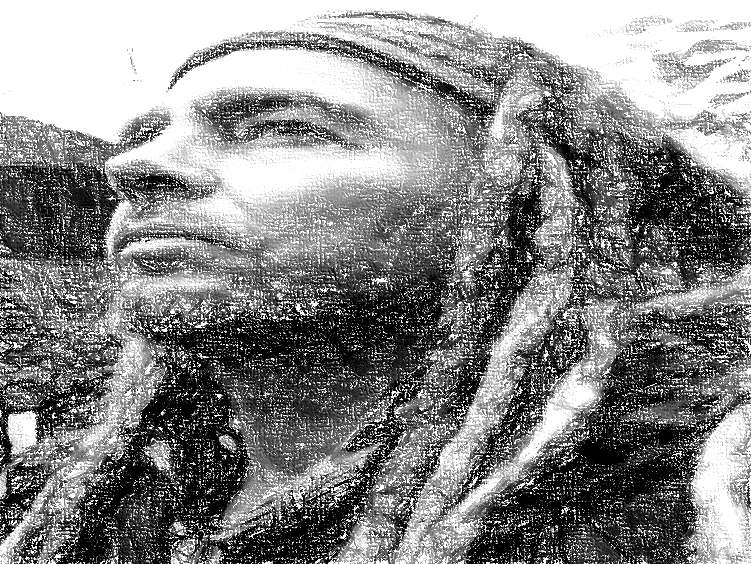
‘avin’ a think about prophecy and stuff, perhaps…
EZEKIEL was a priest at the Temple when the Babylonians captured Jerusalem and exiled its leading citizens in 597 B.C. A few years later, Ezekiel perceived a calling from God and prophesied for the next twenty two years around Babylon. This prophet’s writings were a turning point in the prophetic genre. While his contemporaries thought him strange and difficult, following generations gained political and spiritual insight, as well as strengthening of faith from his reflective and affected discourses. The book of Ezekiel presages the apocalyptic style of Daniel, Revelation and many mystical inter-Testamental writings, including the so called Dead Sea Scrolls of the first century Qumran community.
The word mortal in the New Revised Standard Version of the Bible quoted in our reading today, is a translation from the Hebrew, בן–אדם, ben-‘adam, which means literally Son of Man. This phrase is taken up famously in the book of Daniel, and is of course often used by Christians as a title for Jesus, usually in a messianic context, with particular reference to Daniel and the later doctrine of the Messiah’s second coming. But Son of Man is most used in Ezekiel (93 times). Significant? Or not? A precursor to a messianic title for Jesus? A coincidental Hebrew/Aramaic idiom for humble reference to oneself or to prenote an important saying? A ripple into time past from the centre of history – the Christ event?
Such questions are the stuff of theology and interesting to mind faith but the message of Ezekiel, just like Jesus’ message, is not about educated guessing, academic insight or doctrinal orthodoxy. Ezekiel, Jesus and all the prophets of the Hebrew and Christian Scriptures are not school teachers, university lecturers or even religious or political preachers. They are spiritual masters.
A spiritual master makes no attempt to be polite or even nice. She or he does not build lovely patterns of argument and does not offer a step by step guide to enlightenment. “A master”, writes Fr Richard Rohr, “intentionally leaves a student in the belly of the whale, on the horns of our own dilemmas, struggling with parables, with problems, riddles, and koans.” A master destabilizes the safety devices of the false self or ego so that our self-serving and learned logical reasoning crumbles and we are forced to call on the deeper resources of heart and larger mind. The road to wisdom must necessarily pass through destabilization and therefore powerlessness. The work of a spiritual master is to help us get out of our own way so that we may ourselves pull back the veil that stands between us and truth or reality. Thus the cosmic universe of wisdom and mystery is for us exposed, laid bare, opened.
So, as we come to our Scripture readings today and later, as we walk in nature or sit at home, may we pray that we can allow the flow of our own desire to be aligned with the flow of God’s desire. May God’s living water, flowing through every word and action of Jesus, Ezekiel and all the saints and prophets, flow through us, course through our souls and bodies and into the lives of the people we will meet in the weeks and months ahead. If we do not have that desire, then may we pray that we might desire to desire it!
“But if the sentinel sees the sword coming and does not blow the trumpet, so that the people are not warned, and the sword comes and takes any of them, they are taken away in their iniquity, but their blood I will require at the sentinel’s hand.” (Ezekiel 33.6)
Learning to Un-know
•August 13, 2014 • Leave a Comment
Bathed in the cadence of unknowing
Unknowing that the universe chimes untimed
Unchained, she dances, across starry-eyed expanses
Calling me home. Calling me home
©Tim Ardouin 2014
Fr Thomas Keating says that if you want to imagine God, then you’d better try imagine God “really big…massive, in fact!” Pretty much everything the wise American monk says after that suggests that he is sure you can’t actually imagine God at all. God is unimaginable. We apprehend God, experience God, beyond the realm of our imagination. Communicating that experience is beyond the scope of any human faculties. We might speak of God but what we speak of is not equal to God. We might write songs and poems about God or paint the most wonderful paintings. We may theologise or philosophise, even do the most profound science or maths. None of it comes close. And yet God is closer to us than our own breath.
So, as the autumn air begins to freshen and nature changes her colours once again, but differently and beautifully moment by moment, why not just let yourself forget what you think you know about you and me and God and nature and about this whole universe of life and death and life? Why not just let leaves fall into your hair and breathe God’s sweet, sacred air.
Peace be with you, friend.

“Have you understood all this?” They answered, “Yes.”
•July 25, 2014 • Leave a Comment
“Jesus told the crowds all these things in parables; without a parable he told them nothing. This was to fulfill what had been spoken through the prophet: ‘I will open my mouth to speak in parables; I will proclaim what has been hidden from the foundation of the world” (Matthew 13.34-35).

Why parables? Why not just tell us how the kingdom of heaven is? Why not just describe it for us? Why all this “without a parable he told them nothing” mysteriousness? What’s that supposed to mean? Are you hiding something from us? Can’t you just lay it out for us, tell it like it is? How do I know that what I think about when I hear your parable is what you were thinking about when you told it?
Have you felt these questions rising in you, or other ones, when you’ve read or listened to the parables of Jesus?
As we’ve looked at the parables in Matthew Chapter 13 over that last three Sundays, verses 10 and 11 have been left out of our readings. These verses show that Jesus’ disciples had noticed a dramatic change in Jesus’ teaching style now the crowds had started showing up wherever he went. They too wanted some answers and Jesus’ response doesn’t make it any easier: “Then the disciples came and asked him, “Why do you speak to them in parables?”
He answered, “To you
it has been given to know the secrets of the kingdom of heaven,
but to them it has not.”
Could it really be that Jesus was deliberately trying to confuse his listeners and that it has been given to the lucky chosen few to understand the kingdom of God but the rest of humanity is shut out by a literary smoke screen? The second century Gnostics thought so but they were heretics.
I don’t think Jesus means that at all but he speaks from experience. Some people understand something about themselves, about God and about life and truth, when they hear Jesus or see him perform signs of the kingdom. Others do not. But it is not because of any divine masking or concealing. They don’t see because
they don’t
want to.
Jesus’ parables are not complicated. They are delivered in the street Aramaic language of the people and they contain imagery from their everyday lives. They are short and memorable, easily passed on through oral tradition. That’s why they survived the years before the evangelists realized they should write them down. However, the parables demand a response from the listener. They show the way of God’s kingdom and hold up a mirror to the lives of Jesus’ audiences.
This mirror Jesus holds up is not like the ones in the gym, curving in and out in all the ‘right places’, urging your ego to shout “pecs!” or “arms!” while you squeeze out one more rep. No. Jesus’ mirror is clear enough for you to see your soul, your bald patch and your gut. Look or look away. The choice is yours.
But if you dare to look, then look deeply. Look below the surface, with humility and with faith. Let the God who loves you more than you could ever dream draw you into herself. Let the parables disarm you and catch you off-guard. They will help you discover who you really are and open to you the kingdom of heaven that is already breaking in on you. It is treasure for which you might rightly sell all you possess. Croeso adre. Welcome home.
Drenched in Grace
•July 10, 2014 • 1 CommentListen! A sower went out to sow. And as he sowed, some seeds fell on the path…Other seeds fell on rocky ground…Other seeds fell among thorns…Other seeds fell on good soil and brought forth grain…Let anyone with ears listen!
(Matthew 13.1-9)

The sower sows but the seed fails. He sows again. Failure. And again. Uh oh. Fail. Yet again the sower throws the seed and grace happens.
“God’s grace has a drenching about it”, writes Max Lucado in his book Grace: More Than We Deserve, Greater Than We Imagine. The ground in Jesus’ parable of the sower is drenched in seed. Similarly, God’s Word is sown in us again and again, in abundance, until “does not understand” (Matt 13.19), “has no root” (vs 21), “the cares of the world and the lure of wealth” (vs 22) cease to snatch, fade or choke us but instead give way to the fruit of heaven (vs 23).
God drenches us until the seed finds the fertile places in us.
Sometimes it falls on the parts of our souls which are hardened by who we think we have to be to survive – the parts which we have walled off against pain or emotional turmoil, a sense of rejection or alienation, of being stood up or let down. Oh our defences go deep don’t they? Fear is the snatcher of hope, bitterness her suffocating shroud. But love’s drenching does not give up.
Sometimes we are slain by truth – a word, a phrase from the lips of the prophets, the teachings or deeds of the Christ. And we rejoice. But then we blur it and merge it with the precepts of our minds, ignoring the root of Apostolic inheritance, drifting
in fantastic seas
of elusive
philosophic
propitiation.
We don’t deserve it but the sower of peace keeps on sowing.
And then there are the thorns. The seduction of self-worth intoxicates. The demands of conformity, efficiency, punctuality, relevance, the seen-to-be-busy-ness of our programmed and our programming existence. Still the seed from the hand of God comes.
Still. Be still.
It comes.
And it falls in the spaces and in the cracks where our souls still breathe.
In the spaces and in the cracks, the seed of God’s love is watered. By grace, it is drenched in the “living water” from a Samaritan well-side and from “the river of the water of life.” The seed is tended by God’s Blessed Son in the hearts of our true selves until we are shaken to our senses by grace.
So it is that God sends us. As he sends Christ, in Christ, he sends each one of us. Into the world we are called, to sow and to never give up. We are to drench the soul of our communities with love.
God puts the seed in our hand. God gives us the power to disperse it. God will cause it to grow.
Be faithful.
Be patient.
Forgive.
Love.
Sow.
God Is God (hidden and revealed)
•July 5, 2014 • Leave a CommentIn my inmost self I dearly love God’s law, but I see that acting on my body there is a different law which battles against the law in my mind. So I am brought to be a prisoner of that law of sin which lives inside my body…Who will rescue me from this body doomed to death?
God — thanks be to him — through Jesus Christ our Lord (Romans 7.22-25)
To the “wise and intelligent”, the things of heaven are hidden, but God reveals them to “children”. And Jesus thanks God for both these facts (John 11.25). In John’s Gospel, the kingdom of heaven is received not by the religious, nor by the powerful or upstanding in society. The hearts open and willing to receive the messiah’s seeds of love are the hearts of the poor, the oppressed, the broken and the childlike.
Faith and truth are not intellectual pursuits; they are the gifts of God, held out freely to all, received by few.
Though all Jewry had been waiting for the messiah for hundreds of years, when he came, he was rejected by the very ones who had been making all the noise, who had enshrined and prescribed his protracted coming in the doctrines and rituals of their religion.
Why do they reject Jesus?
Simply because the messiah turns out to be other than what is expected. He doesn’t do what he is supposed to do and he is not bound by any proscriptive socio-religious convention. The rigid ones don’t like this. They never do: “We played the flute for you, and you did not dance; we wailed, and you did not mourn” (Jn 11.17).
But Jesus doesn’t waste his time or energy dwelling on the negativity that seems to stalk his every move. With humorous irony, he mocks the ignorance that complains on one hand that one man of God (John the Baptist) is an aesthetic, and then that the next (Jesus) eats and drinks with sinners and outcasts.
Does the moaning and groaning obstruct the messianic mission?
Certainly not!
Jesus turns to the Father in prayer and gives God thanks and praise. Jesus’ conscience is God’s conscience. What’s God’s will is his will. The mission is God’s and all power to fulfil it comes from God (“All things have been handed over to me by my Father” vs 27). Rather than worry about the negativity of the “wise and intelligent”, Jesus simply holds out his arms to “all …that are weary and are carrying heavy burdens”, calling them to lay down their burdens and take up his yoke, the yoke of the kingdom of God.
“Come…and I will give you rest”.
Now today much darkness and negativity surrounds the movement of Jesus’ church. There are expectations and narrow-vision ideas about what “church” is supposed to look like and behave like. There are many who expect the church to dance when their society plays its flute and mourn when they wail. But this is not the way of the church. The mission of the church is not society’s mission but God’s mission. It is the very same messianic mission of Christ.
The church is moving in this time but it is not beholden to the movement of this or any other time. The church moves in God’s time.
Come. Do not be afraid. For he will “give you rest for your souls” .
“There is not in the world a kind of life more sweet and delightful, than that of a continual conversation with God; those only can comprehend it who practice and experience it”. (Brother Lawrence, 17th Century France)
God Is God (Three)
•July 3, 2014 • Leave a CommentThe very night before Herod was going to bring him out, Peter, bound with two chains, was sleeping between two soldiers, while guards in front of the door were keeping watch over the prison. Suddenly an angel of the Lord appeared and a light shone in the cell. (Acts 12.6,7)
THIS WEEK, I want to encourage you to reflect on three moments in our reading from the Acts of the Apostles (Acts 12.1-11). First, let’s look at Herod. I quote from the New Jerusalem Bible because its choices in translation strike me as being particularly deep.
A) 12.1 It was about this time that King Herod started persecuting certain members of the church.
2 He had James the brother of John beheaded,
3 and when he saw that this pleased the Jews he went on to arrest Peter as well.
Herod is concerned about pleasing the crowd. The kind of power he has is dependent on appeasing his Roman overlords and at the same time somehow pleasing the populace of the puppet-kingdom they allow him, in full cooperation with the Empire, to “rule”. Herod is a symbol of the worldly political mover. He is ready to sell out all integrity for the sake of maintaining his own position. Peter, James and the other post – Pentecost followers of Jesus are willing to die rather than trade in their fledgling Christian integrity.
Where do you see Herod today in – the world – the church – yourself? And where in these do you see Peter or Paul?
How far should today’s church/you be seeking to please people, the state, the individual? At what price?
B)5 All the time Peter was under guard the church prayed to God for him unremittingly.
Unremitting – never slackening or stopping; unceasing; constant…
The next sentence sets the
scene for the angelic deliverance of Peter from the prison.
How important is the unremitting prayer of the faithful toward the liberating action of the passage? What is the writer’s intention in the inclusion of verse 5 at this point in the narrative?
Where is the unremitting prayer of the church in evidence in this parish? Are there people here who could provide this important ministry in a structured or coordinated way? How might this benefit the mission of the church in this time/place?
C) 10 They passed through the first guard post and then the second and reached the iron gate leading to the city. This opened of its own accord; they went through it and had walked the whole length of one street when suddenly the angel left him.
11 It was only then that Peter came to himself. And he said, ‘Now I know it is all true.
There is great light in the cell. Peter’s shackles fall off and, as he walks with the angel, all barriers to his freedom are removed. But it is when the angel leaves him at the end of the street that Peter realises his liberation is not just vision but reality.
Where is the angel now in – the life of the church – your life? What is the vision? What is the reality? Why are the barriers to Peter’s freedom removed? What are the barriers for us/you now? How ready are we/you for the shackles to fall or the gates to open of their own accord?




 Tonnau Duw ('God's waves') Fr Tim Ardouin